

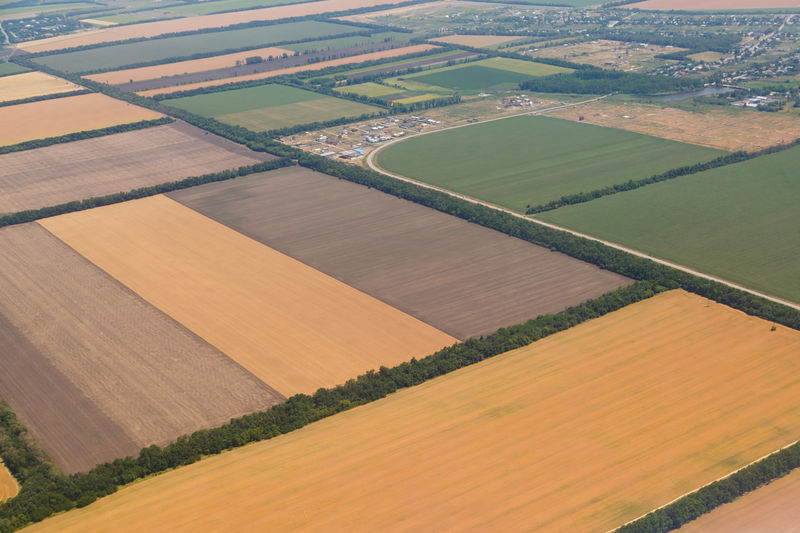
Is farmland a good investment?
Chief investment officers around the world are used to hearing this question from clients and perhaps even peers in their community.
As global markets fluctuate and traditional investment avenues like stocks and bonds face volatility, many are looking to diversify their portfolios with alternative assets.
Farmland, with its reputation for steady appreciation and vital role in global food production, offers a potential haven of stability in an uncertain world.
But, to repeat the question, is farmland a good investment in 2025? For some, the idea of venturing into agricultural land may seem unconventional or even risky in a world where digital assets, tech stocks, and real estate dominate the conversation.
In this guide, we’ll assess if farmland can be the next big opportunity for your investment portfolio, exploring its potential returns, the challenges it presents, and the factors that make it a valuable asset class for 2025 and beyond.
Are you looking to make smarter investments? Subscribe Today to the cio investment club’s newsletter to get the latest insights from proven industry experts.
Is buying farmland a good investment? 5 key factors to consider
1. Farmland is a great inflation hedge
Is farmland a good investment? To answer this question, the first place most investors would look is how the value of farmland performs in times of high inflation.
Agricultural land has long been viewed as an effective hedge against inflation. Its value often increases when food prices rise during inflationary periods, something that we saw in the recent cost-of-living price hikes and record inflation.
A recent Savills study shows this vividly with global farmland prices spiking between 2021 and 2023, most notably in Central Europe and the Americas, with a 13% and 8.5% respective increase in 2023 alone. Globally, the average annualised value growth rate is 5.2% since 2017.
The global spike in farmland value (2021-2023)

Their historical performance (farmland values have risen globally with a 10% AAGR since 2000) also suggests that agricultural investments are resilient long-term options.
This makes farmland an appealing option for those looking to preserve their capital as inflation concerns continue.
2. Farmland values are likely to rise over the coming years
Talk of inflation-affected values is fine, but what about the short-term future: Is agricultural land going up in value over the next few years?
Research suggests that several major economies are likely to see steady yet unspectacular growth. In the United States, for example, pastureland values have risen steadily every year since 1997, a trend not even bucked by the pandemic, with a 5.2% increase in 2024 — a statistic backed up by the USDA. Healthy demand for rural land means there’s little reason to believe that they won’t continue.
The US’s steadily rising pastureland values

Source: FB
In Europe, the EU Agricultural Outlook 2024-35 by the European Commission has stated that farmland values are projected to rise over the next few years, influenced by several key factors.
EU agricultural product policies focusing on protein crops, crop rotation, and plant proteins are likely to drive demand, helped by consumer preferences for sustainable and plant-based foods, as well as a reduction in the reliance on imported protein crops.
Investors looking to make inroads into farmland investment, however, should also take into account specific to their location, including livestock production and market dynamics, before making the call.
3. Farmland investment helps meet the growing demand for sustainability
Environmental, social, and governance (ESG) factors continue to shape investment strategies, so farmland is emerging as an attractive asset class for investors keen to stay in line with them.
Last year saw climate-focused fund announcements make the headlines. BTG Pactual’s $1 billion initiative in Latin America, which includes projects in Brazil’s Cerrado biome, is a major example. This deal could generate up to 3.9 million carbon credits through nature-based solutions to land management, like reforestation and conservation.
BNP Paribas’ Future Forest Fund, launched to meet the global demand for sustainably managed timber, is another example of the growing interest in sustainable natural capital investments.
Farmland investments tied to sustainability offer dual benefits for investors. On one hand, they allow capital to tap into the burgeoning green finance market, driven by increasing regulations and consumer demand for ethical business practices.
This global market, also known as the impact market, recently hit $1.5 trillion for the first time and looks set for further growth, according to The GIIN.
On the other hand, these investments often benefit from government incentives, such as subsidies for carbon credits and sustainable farming practices, making them more attractive financially.
Corporate partnerships focused on ESG initiatives, such as those seen with major agricultural brands and climate-focused funds, further help the value proposition of sustainable farm investments.
With all this in mind, Investors can look to farmland as a way to achieve both financial and environmental returns — an opportunity that will likely continue to expand in 2025 and beyond.
4. Strong institutional investment signals long-term confidence
Farmland has attracted major institutional investors recently, adding to its reputation as a resilient investment opportunity.
In 2024, farmland transactions surged, with Farmland Partners Inc. selling $289 million worth of U.S. farmland to Farmland Reserve being a notable example. Soon after, BNP Paribas launched the Future Forest Fund mentioned above.
Farmland’s low correlation with traditional assets makes it appealing to investors seeking diversification in 2025, a move encouraged by the likes of Morgan Stanley following the recent stall in stock market momentum.
Farmland’s performance is often influenced by factors such as crop yields, land values, and agricultural trends — making it less sensitive to broader market swings.
Agricultural land’s low volatility, plus its passive income through crop yields and capital gains tax advantages, are music to institutional investors’ ears. This is also helped by continued subsidies across the globe for arable land.
Further investment in the short term seems likely, which is good news for individual investors seeking steady returns and less exposure to the stock market’s fluctuations.
5. Agritech is playing a big role in making farmland more valuable
New technologies like regenerative farming make farmland an attractive investment for asset owners seeking long-term sustainable returns.
Regenerative agriculture uses technology like soil sensors, drones, and GPS to monitor crop health, optimise irrigation, and track carbon sequestration. It also incorporates AI and data analytics for precision farming, helping reduce chemical use and improve soil fertility for long-term sustainability.
Richard Jacobs and Edzard Potgieser recently wrote a report on the topic for wealth management firm Van Lanschot Kempen, and they believe the aforementioned institutional interest is set to revolutionise the agricultural sector.
“Institutional capital can play a significant role in expediting the transformation of agriculture to a regenerative system”, they write. “This is not philanthropy, where returns are secondary. Investing in regenerative farms and practices is a long-term real asset activity, where financial returns and sustainable returns go hand in hand”.
This confidence is borne out of the ability of regenerative farming to reduce operational costs through a decreased reliance on synthetic inputs and improved soil fertility. This leads to higher profit margins and long-term capital growth.
The integration of modern technology, such as precision agriculture and data-driven decision-making, also optimises resource use and increases efficiency.
For an asset management strategy, investing in farmland may lead to long-term returns, according to the report.
“For investors, there is a long-term potential for attractive revenue returns and capital growth from a healthier, more durable agricultural system serving generations to come,” say Jacobs and Potsgeier.
 | “For investors, there is a long-term potential for attractive revenue returns and capital growth from a healthier, more durable agricultural system serving generations to come”. ― Richard Jacobs and Edzard Potgieser, Van Lanschot Kempen |
Is farmland a good investment? The potential risks
Like with any asset class, farmland’s long-term future isn’t necessarily rosy. There are certain risks that any investor must bear in mind before parting with their money.
1. Liquidity challenges
Farmland is a physical asset that typically requires a long-term commitment, unlike stocks or real estate investment trust (REIT) shares that can be bought or sold quickly.
Those looking for quick returns or short-term flexibility are likely to be disappointed as selling land is often a lengthy process, akin to agricultural property sales.
Investors who need to access funds quickly should balance this against the above positives of agricultural investment to decide whether they should proceed.
2. Climate and regulatory risks in farmland investment
Farmland investments are also subject to climate-related risks.
Changes in weather patterns, water scarcity, and extreme events such as droughts or floods can directly impact crop yields and thus the profitability of agricultural land. A 2023 “Farmer’s Voice” study by research firm Bayer shows the impact of climate change on farmers worldwide, with 71% reporting substantial effects on their farms.
This has led to 80% of farmers taking steps to reduce greenhouse gas emissions, with a strong demand for innovation, particularly in crop protection and technology to combat extreme weather.
Agricultural regulations, including environmental and water management policies, are also evolving and might inadvertently affect farmland productivity through changes in farming practices or increased operational costs.
Is farmland a good investment in 2025? Yes, with the right knowledge
Farmland presents a compelling opportunity for asset owners, offering strong returns, portfolio diversification, and a hedge against inflation.
However, like any investment, it's crucial to understand the challenges. Factors such as climate risks, regulatory changes, and the long-term illiquidity of farmland require careful consideration before investing.
Investors with the right industry knowledge and a long-term perspective can reap the rewards of this resilient asset class. Connecting with experts and staying informed about the latest asset management trends are the best ways to gain the knowledge and confidence needed to make informed decisions in the farmland market.
Do you want to be part of an investment community where you can exchange opinions and ideas about investments? Register today to become a part of the cio investment club.
Important Disclaimer Notice
This document is produced by Instaconnect Limited, trading as cio investment club, a company registered in England & Wales with registration number 15262951. Instaconnect Limited is neither authorised nor regulated by the Financial Conduct Authority in the United Kingdom nor the Securities and Exchange Commission in the United States of America.
This document is a marketing documentation and is not intended to constitute an invitation or an inducement to engage in any investment activity. It is not intended to constitute investment advice and should not be relied upon as such. It is not intended and none of Instaconnect Limited, its holding companies or any of its or their associates shall have any liability whatsoever for (a) investment advice; (b) a recommendation to enter into any transaction or strategy; (c) advice that a transaction or strategy is suitable or appropriate; (d) the primary basis for any investment decision; (e) a representation, warranty, guarantee with respect to the legal, accounting, tax or other implications of any transaction or strategy; or (f) to cause Instaconnect Limited to be an advisor or fiduciary of any recipient of this report or other third party.
The content and graphical illustrations contained in this document are provided for information purposes and should not be relied upon to form any investment decisions or to predict future performance. Instaconnect Limited recommends that recipients seek appropriate professional advice before making any investment decision. Although the information expressed is provided in good faith, Instaconnect Limited does not represent, warrant or guarantee that such information is accurate, complete or appropriate for your purposes and none of them shall be responsible for or have any liability to you for losses or damages (whether consequential, incidental or otherwise) arising in any way for errors or omissions in, or the use of or reliance upon the information contained in this document.
To the greatest extent permitted by law, we exclude all conditions and warranties that might otherwise be implied by law with respect to the document, whether by operation of law, statute or otherwise, including as to their accuracy, completeness, or fitness for purpose.
Instaconnect Limited and its logo are proprietary trademarks of Instaconnect Limited and are registered in the United Kingdom.
Unauthorised copying of this document is prohibited.
© Copyright Instaconnect Limited 2025